In This Guide
There are places in this country where an entire culture grew up around a single thing — the way Napa grew up around wine or Nashville grew up around music. Kentucky grew up around bourbon. Not just the making of it, but the pride of it, the history of it, the way it lives in the landscape and the people. Going there to drink it straight from the source is one of those trips that changes how you think about what’s in your glass.
This guide covers everything you need to plan a Kentucky Bourbon Trail trip — the five regions, the distilleries worth knowing, where to stay, what to pack, how to get the most out of every tasting, and how to get bottles home without destroying your luggage. It’s a lot of ground. Let’s take it one section at a time.
Why Kentucky Is the Center of the Bourbon Universe
Ninety-five percent of the world’s bourbon is made in Kentucky. That number gets thrown around a lot, and after a while it starts to sound like marketing copy, but spend a few days driving through the Bluegrass State and you start to understand it differently. The rickhouses are everywhere — massive dark warehouses stacked with barrels, sitting on hillsides and tucked behind cornfields, aging bourbon in the Kentucky heat and cold through the seasons. It’s not a romantic exaggeration. It’s just the landscape.
The reasons bourbon ended up here are practical ones. The limestone-filtered water running through Kentucky is naturally iron-free and mineral-rich, which matters enormously in the fermentation and distillation process. The climate swings hard between hot summers and cold winters, which forces bourbon in and out of the oak barrels through the seasons in ways that accelerate flavor development. And the grain — primarily corn, with rye or wheat and malted barley in the mix — grows well here. Geography, geology, and climate all pointed to the same place.
The legal definition of bourbon requires it to be made in the United States, not specifically Kentucky — but Kentucky’s head start, its water, and honestly its culture mean it remains the undisputed center of the bourbon world. That’s not going to change anytime soon.
Planning Your Trip — When to Go, How Long to Stay
The Kentucky Bourbon Trail runs year-round, and distilleries are open in every season, but there are a few things worth knowing before you book.
Spring and fall are the sweet spots. The weather is manageable, the bluegrass countryside is at its most photogenic, and the crowds haven’t hit their summer peaks. October in particular — when the leaves are turning and Keeneland’s fall race meet is running — is one of those Kentucky experiences that earns its reputation. Spring brings the Kentucky Derby and all the chaos that comes with it, so if you’re planning around early May, book your accommodations well ahead. Derby weekend rates are a different universe from the rest of the year.
Summer is busy and hot, but the distilleries are fully staffed and tours are running constantly. Winter is genuinely underrated — the tourist traffic drops, some of the smaller distilleries are more accessible, and there’s something right about drinking aged whiskey in cold weather.
As for how long to stay, the honest answer is that a long weekend gets you the highlights and a full week lets you go deep. If you’re anchoring in one region — say, Bardstown or Louisville — three or four days gives you time to hit five or six distilleries without feeling like you’re rushing. If you want to cover multiple regions, build in a week and plan your routing carefully. Kentucky is not as large as it looks on a map, but the distilleries are spread out, and driving between them adds up.
Once you know when you’re going, the routing matters as much as anything else. The full logistics breakdown — how to string distilleries together without wasting half your day in the car — is in the Bourbon Trail Trip Planning Guide →
The Five Regions of the Kentucky Bourbon Trail
The Kentucky Bourbon Trail isn’t a single road. It’s a collection of distilleries across five distinct regions, each with its own character, its own concentration of producers, and its own reason to make the drive. We’ve broken them out separately so you can plan each one properly.

Bardstown — The Bourbon Capital of the World
Bardstown is where most people start, and for good reason. Called the Bourbon Capital of the World — a title it wears without apology — Bardstown sits at the center of Nelson County and has more distilleries within a short drive than anywhere else on the trail. Heaven Hill, Willett, Bardstown Bourbon Company, Maker’s Mark, and Jim Beam are all within striking distance. The town itself is worth a day on its own — good restaurants, genuine history, and a pace that suits a bourbon trip. For everything you need to know about staying and tasting in Bardstown, the full regional guide has the complete picture.
Distilleries, lodging recommendations, and everything worth knowing before you go: The Bardstown Bourbon Trail Guide →
Louisville — Where the Trail Meets the City
Louisville is where the trail meets the city. Whiskey Row — the stretch of Main Street that was once the commercial heart of the American bourbon industry — has been revived and is now lined with distillery tasting rooms, bars, and bourbon-focused restaurants. Angel’s Envy, Rabbit Hole, and Michter’s all have urban distilleries here worth visiting. Louisville is also the easiest entry point if you’re flying in — the airport is minutes from downtown — and the food and nightlife scene means you won’t run out of ways to end a day of tasting.
Full distillery and lodging coverage for Kentucky’s largest city: The Louisville Bourbon Trail Guide →
Lexington — Bourbon Country Meets Horse Country
Lexington puts you in the heart of horse country, and the bourbon and thoroughbred cultures overlap more than you’d think — both industries grew up on the same bluegrass soil, the same limestone water, the same Kentucky pride. Wild Turkey, Four Roses, and Buffalo Trace are all within easy reach of Lexington, and Keeneland — one of the most beautiful racetracks in America — is right there if you want to add a race day to the itinerary. It’s a different rhythm from Bardstown and Louisville. Slower, more spread out, and worth every mile.
Everything you need for a bourbon trip anchored in the heart of the Bluegrass: The Lexington Bourbon Trail Guide →

Frankfort — The Capital City and Buffalo Trace
Frankfort, the state capital, is quieter than Louisville and Lexington but punches well above its weight for bourbon. Buffalo Trace — one of the most storied distilleries in the country, continuously operating since before Prohibition — is right in town. You can walk to it from downtown along a trail that follows the Kentucky River. Castle & Key, the stunning restored Victorian distillery about ten miles out, is worth the drive on its own. Most people don’t spend enough time in Frankfort. That’s their loss.
Buffalo Trace, Castle & Key, and where to stay in Kentucky’s capital city: The Frankfort Bourbon Trail Guide →
Northern Kentucky — The Region Most People Skip
Northern Kentucky is the region most people skip, and that’s a mistake. Sitting just across the Ohio River from Cincinnati, the Newport and Covington area has developed a genuine craft distillery scene that most bourbon travelers never find. New Riff Distillery — one of the most interesting producers in the state — is here, along with a handful of smaller operations on both sides of the river. If you know about New Riff and think that’s the whole story, it isn’t. This corridor deserves its own trip.
The distilleries and stays that make the Northern Kentucky corridor worth the detour: The Northern Kentucky Bourbon Trail Guide →
Where to Stay
Each region has its own lodging guide with specific recommendations across price points, group sizes, and travel styles — from a historic 1787 cottage walking distance to downtown Bardstown to a bourbon-themed boutique hotel steps from Whiskey Row in Louisville. We’ve covered both VRBO and traditional hotels across all five regions so you’re not starting from scratch.
A few general notes worth knowing before you book. Derby weekend and Keeneland race meets drive prices and availability across the entire state, not just Louisville and Lexington. If your trip overlaps with either, book early. The rest of the year is considerably more manageable.
If you’re traveling as a group — four or more people — a VRBO property almost always makes more sense than a hotel. You get a full kitchen, shared living space, and room to set up a proper tasting at the end of the day without fighting for space in a hotel lobby. If it’s just two of you, the boutique hotel options in each region are genuinely good and put you closer to the action. Start with the regional guide for wherever you’re anchoring your trip.
What to Pack
There’s a dedicated packing guide that goes into full detail, but a few things are worth flagging here. The full breakdown — what to bring, what to leave home, and how to set yourself up for a day of distillery visits — is at What to Pack for a Distillery Tour →
Bring your own glass. Every serious tasting room will give you something to drink from, but if you’re doing multiple distilleries in a day and want a consistent reference point for comparing pours, having your own Glencairn matters. The standard two-glass travel set comes in its own protective carton and is the easiest way to travel with proper glassware. If you’re going deep — hosting tastings along the way or bringing glasses for a group — the HURZMORO leather carrying case holds six Glencairns with a lock and a handle. It’s a newer product with limited reviews, but the design is exactly right. Worth keeping an eye on as it builds its track record. Case only — glasses not included, so pair it with your Glencairn set of six.
Glencairn Whiskey Glass Gift Set of 2 in Travel Case
Two Glencairns in individual protective cartons, packaged together in a travel case. The right glass for every pour at every distillery. Over 1,400 reviews at 4.8 stars.
View on Amazon →HURZMORO Leather Glencairn Carrying Case — 6 Glasses
Lockable faux leather case with a built-in handle, six compartments, designed specifically for Glencairn glasses. Case only — glasses not included. Newer product with limited reviews, but the construction and concept are exactly right for a serious distillery day.
View on Amazon →How to Taste at a Distillery
Tasting at a distillery is a different experience than tasting at home, and there’s a right way to approach it. The full breakdown is in How to Taste Bourbon at a Distillery →, but the short version is this: eat before you go, drink water between pours, take notes, and don’t try to hit five distilleries in one day if you actually want to remember any of them.
Three distilleries in a day is a good pace. Two is better if you’re doing full tours at each one. The tours themselves — the rickhouse walks, the still rooms, the barrel warehouses — are genuinely worth doing, especially at the historic properties. Buffalo Trace’s campus alone takes a couple of hours to do properly.
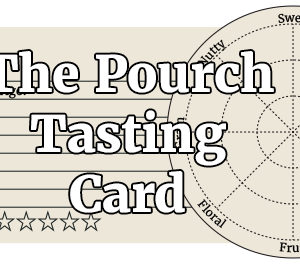
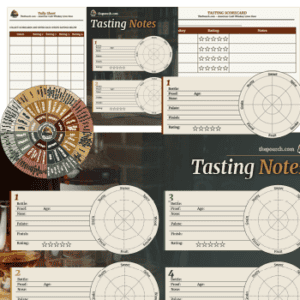
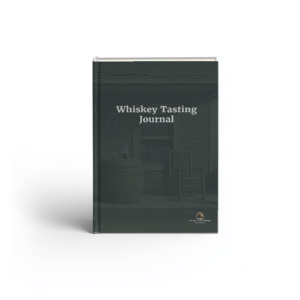
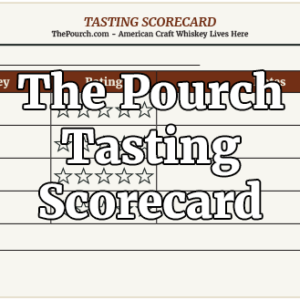
And bring something to write it all down. You’ll think you’ll remember everything. You won’t. The Pourch tasting journal was built for exactly this — each entry has a full context page for the distillery visit alongside the tasting notes, so the memory of that single barrel pick doesn’t get lost somewhere between the third stop and dinner.
The Pourch Bourbon Tasting Journal
Designed for both home tastings and distillery visits. Structured tasting forms, a 12-spoke flavor radar chart, and a full context page per pour — so everything you taste on the trail has a place to live. Print-on-demand, shipped to your door.
Shop The Pourch →Why the tasting journal is as useful on the road as it is at home — and how to use it at a distillery: Why You Need a Distillery Travel Journal →
Getting Bottles Home Safely
This is the part nobody talks about until they’re standing in a distillery gift shop holding a bottle they can’t find at home, doing the mental math on whether their suitcase can handle it.
It can. You just have to pack it right.
The system that works: wrap each bottle in a dedicated protector bag, tuck it in the center of your checked luggage surrounded by clothes, and use packing cubes to create structure around it. The protector bags handle impact and leaks independently, so if one bottle somehow breaks, it doesn’t take everything else with it. TSA allows sealed bottles of spirits in checked luggage as long as they’re under 140 proof and properly packed. Distillery gift shop bottles are almost always sealed properly. You’re fine.
UPGRADED PROTECTION Bottle Travel Bags — 4 Set (8 Pieces)
PVC outer layer plus double bubble wrap interior with a triple-seal leakproof closure. Eight pieces total — enough for a serious haul. If a bottle breaks, the liquid stays in the bag. Reusable across trips.
View on Amazon →Monkkino Inflatable Bottle Protectors — 10 Pack
Inflate in seconds with the included pump. Nine-layer PE/PA material with a single air-lock valve that holds pressure for months. Compact before inflation, serious protection after. Good for longer trips where you’re bringing home a full case.
View on Amazon →Packing cubes keep your luggage organized and — more importantly for our purposes — create a structured interior that keeps bottles from shifting during the flight. The Shacke five-piece set is the reliable workhorse here, with four sizes plus a laundry bag and YKK zippers that hold up trip after trip. The Veken compression set gives you more flexibility if you’re packing both clothes and bottles and need every cubic inch to count.
Shacke Packing Cubes — 5 Set
Four sizes plus a laundry bag. YKK double-pull zippers, water-resistant nylon, uniform four-inch depth for consistent stacking. A legitimate packing system — not just a set of bags. Nearly 24,000 reviews.
View on Amazon →Veken Compression Packing Cubes — 9 Set
Compression zippers reduce volume without tools. Four cube sizes plus toiletry bags, a laundry bag, and a shoe bag. For the trip where you’re packing heavy and need every inch of your checked bag to work harder. Over 13,000 reviews.
View on Amazon →One more thing worth having before you go — a guide that actually knows the trail. Whiskey Lore’s Kentucky Bourbon travel guide is the most useful book in this category, organized around planning and experiencing the trail rather than just listing distilleries.
Whiskey Lore’s Travel Guide to Experiencing Kentucky Bourbon
Learn, plan, taste, tour. The most practical Kentucky bourbon travel guide available — built around the actual experience of visiting distilleries, not just the history of making bourbon.
View on Amazon →The Pourch Verdict
Kentucky is the real thing. Not a recreation of it, not a themed experience built around it — the actual, original place where American bourbon was born and where it’s still being made the way it was always meant to be made. Going there and drinking it where it lives is one of those trips that changes your reference point permanently. Plan it right, pace yourself at the distilleries, pack your bottles carefully, and bring something to write it all down. You’ll want to remember this one.
Affiliate Disclosure: Some links on this page are Amazon affiliate links. If you purchase through them, we earn a small commission at no extra cost to you. We only recommend gear we’d actually put on our own bar. We are never paid to recommend a specific product.