Somewhere around the third distillery of the day, the pours start blending together. Not because anything was bad — because the human palate and the human memory are both fallible under sustained tasting conditions, and nobody’s brain retains the difference between the nose on a fourteen-year wheated bourbon and a nine-year high-rye expression across four hours and a dozen different pours. You think you’ll remember. You won’t. Not with any useful specificity. Not by the time you’re home.
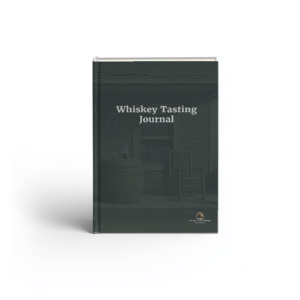
A proper tasting journal solves this problem. Not a generic travel notebook, not your phone notes app, not the little pad of paper in the hotel room. A purpose-built bourbon tasting journal — one that provides the right structure for capturing what you’re experiencing while you’re experiencing it — is one of those things that seems like overkill until you actually use it on a distillery trip and realize it’s the difference between coming home with useful knowledge and coming home with a pleasant blur.
This is part of the larger Kentucky Bourbon Trail travel guide →. If you want to know how to use the journal once you’re at a distillery, the tasting guide → covers that in full.
Why Your Phone Notes Don’t Work
The phone notes app is where bourbon tasting notes go to become useless. Not because the technology is bad — because the format is completely wrong for the task.
Tasting notes require structure to be useful. You need to capture the nose separately from the palate. You need to record the context — which distillery, which expression, which barrel, what proof, what date, what the tour guide told you about this specific pour. You need a way to compare one pour against the next in a format that makes the comparison legible a week later when you’re home. And you need to do all of this quickly, mid-tasting, while the impressions are still fresh.
A blank text field gives you none of that structure. What you end up with is a collection of fragments that make sense while you’re writing them and mean almost nothing three days later when you’re trying to remember why you wrote “vanilla oak spice good finish” with no other context. That could be any of the fifteen bourbons you tasted that day.
Why a Generic Notebook Isn’t Much Better
A blank notebook gives you more space than a phone note, but it still doesn’t give you the structure. You end up making up your own format on the fly — usually inconsistently, usually while you’re mid-tasting — and the notes from stop one look nothing like the notes from stop three. By the time you get home, comparing them is a project that requires decoding rather than reading.
The other thing a blank notebook doesn’t give you is prompts. When you’re in the middle of a tasting, you’re often operating at a sensory level that makes it hard to organize and articulate what you’re experiencing in real time. Structure helps. Being asked specifically about the nose, then the palate, then the finish, then the context forces you to slow down and notice things you might otherwise process and move past without registering.
What a Purpose-Built Tasting Journal Actually Gives You

A good bourbon tasting journal is built around the structure of an actual tasting. Here’s what that means in practice:
A dedicated context page per pour. The distillery name, the expression, the mash bill, the proof, the barrel number if they gave it to you, the date, the tour guide’s name, what made this pour notable. This is the information that gives the tasting notes meaning later — without it, the notes float without anchor.
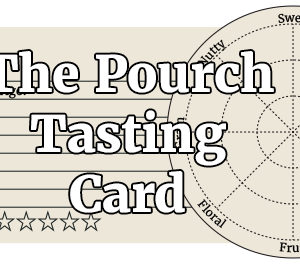
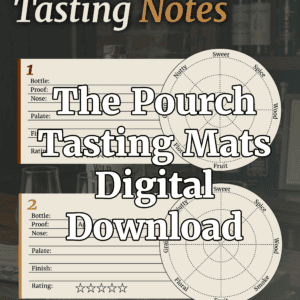
Structured tasting prompts. Nose, palate, finish — each with guided space that prompts you to notice specific things rather than just react generally. The difference between “smells good” and “nose: vanilla, dried fruit, light oak, faint leather” is the difference between a note you can use and a note you can’t.
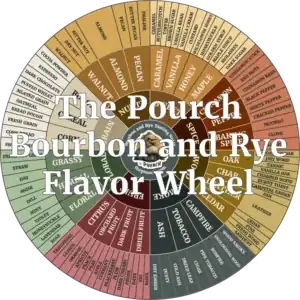
A flavor radar chart. The 12-spoke visual map of flavor categories — fruit, oak, spice, grain, floral, chocolate, caramel, vanilla, and so on — lets you plot where a bourbon sits relative to others you’ve tasted. It makes comparisons visual and immediate in a way that words alone don’t achieve.
An index. The ability to look back across multiple entries and find the pour from Willett on Day Two without reading through every page is what turns a tasting journal from a diary into a reference tool.
Why the Distillery Trip Specifically Needs This
Home tastings are forgiving. You control the pace. You can go back and nose a glass again. You can look up the expression on your phone while you’re tasting it. The bottles don’t change between sessions.
Distillery tastings are not forgiving in the same way. You’re tasting expressions that may not be available anywhere else. The barrel-proof single barrel pick they poured for your tour group may not exist next week — they may have sold through it. The distillery-only release in the gift shop is only in that building. The impressions you form in that tasting room are the only impressions you’ll have, because you’re not going to be able to replicate the pour at home.
Add to that the multi-stop nature of a distillery trip — three or four different producers in a day, each with multiple expressions — and the case for structure becomes overwhelming. The notes you take in real time at stop two are the only reliable record you’ll have of what you tasted at stop two. By stop four, stop two is already a blur.
What to Do With the Notes When You Get Home
The journal pays off in two directions. In the moment, it makes you a better taster — the act of articulating what you’re experiencing forces you to notice it more precisely. After the trip, it becomes a reference tool that changes how you interact with bourbon at home.
You’ll stand in a liquor store and see a bottle you tasted on the trail and have actual notes to consult rather than a vague sense that you liked it. You’ll be able to compare something you’re tasting at home to the single barrel you tasted at the distillery and see how they diverge — which tells you something real about how barrel selection or barrel proof affects a brand’s character. You’ll be able to tell someone else what to order at a tasting room because you have specific notes, not just an impression.
The journal also accumulates. The entry from your first Willett visit sits in the same book as the entry from your second, two years later. The comparison between those two entries — different expressions, different years, different contexts — is the kind of knowledge that builds over time and that you simply cannot build without keeping records.
The same journal that works on the trail works at home tastings. The full case for keeping tasting notes at home — and how to run a proper home tasting — is in The Bourbon Tasting Journal →
The Pourch Bourbon Tasting Journal
Structured tasting forms with a 12-spoke flavor radar chart and a full context page per pour — designed specifically so the distillery visit context and the tasting notes live in the same entry. The context page captures where you were, what the pour was, and what made it worth noting. The tasting form captures the nose, palate, finish, and your overall assessment. Together, they make the notes actually useful. Hardcover, 50 entries, print-on-demand and shipped to your door. Order before your trip.
Shop The Pourch →The journal is one of three things worth bringing on every distillery trip. The other two — your own Glencairn and a system for getting bottles home — are covered in What to Pack for a Distillery Tour →
The Pourch Verdict
The tasting journal isn’t a luxury item for obsessive enthusiasts. It’s a practical tool for anyone who wants to come home from a distillery trip with something more useful than a pleasant memory and a credit card receipt. The single barrel expression you tasted at Willett on a Tuesday in October deserves better than a half-remembered impression. Write it down while you’re there, in a format that actually holds the information. You spent a lot of effort getting to that tasting room. The journal is how you get something out of it that lasts longer than the trip.
Affiliate Disclosure: Some links on this page are Amazon affiliate links. If you purchase through them, we earn a small commission at no extra cost to you. We only recommend gear we’d actually use. We are never paid to recommend a specific product.