By the time I got to pour number four in Minglewood’s five-pour flight, my nose had already checked out for the day. That’s the reality of tasting flights, though — the first couple pours are sharp and vivid, and by the fourth your senses are running on fumes while you’re also trying to keep up a conversation with the bartender and the master distiller standing right next to you. Even distracted and a little nose-blind, the Minglewood Double Oaked Bourbon from Minglewood Distilling Co. & The Ice Plant in Wooster, Ohio, still cut through. This is a Bottled-in-Bond bourbon at 100 proof, finished in a second barrel, and it’s one of the more interesting double oaked bourbons I’ve come across from a craft distillery lately.
Quick Take
| Profile: Sweet grain-forward bourbon with vanilla, caramel, oak, and a nutty edge that turns to sweet leaf tobacco on the finish |
| Proof Management: 100-proof Bottled-in-Bond that drinks easy, no real heat to speak of |
| Standout Feature: Toasted oak finishing barrel that boosts sweetness instead of turning this into an oak bomb |
| Best For: Friday night sippers and anyone building a flight of double oaked bourbons for comparison |
| Watch Out: Short-to-medium finish means it doesn’t linger forever, and the profile leans sweet rather than bold or spicy |
The Story Behind This Pour
This one came near the tail end of a five-pour flight at Minglewood itself, and honestly, that context matters. My palate was tired, my nose was worn down from three pours before it, and I was half-distracted chatting with the bartenders and the master distiller while they talked me through what made this bottle different. Despite all that, the Double Oaked still managed to stand out as something I genuinely enjoyed — which says something, because a mediocre pour doesn’t usually survive a distracted taster with a fatigued palate. It held its own anyway.
Minglewood makes this from their standard mashbill of 70% corn, 25% rye, and 5% wheat. It spends four years in a charred oak barrel, standard bourbon aging, and then gets an extra year of finishing in a toasted (not charred) oak barrel. That toasted oak finish is really the whole story here — it’s what separates this from a lot of other double oaked expressions on the market, which tend to lean into a second round of char and end up tasting like you’re chewing on a barrel stave. This one doesn’t do that. The toasted oak seems to preserve and even enhance the sweetness rather than burying it under more wood tannin.
Production Background
Minglewood Distilling Co. operates out of a historic building in downtown Wooster known as The Ice Plant. The building originally housed the Minglewood Coal and Ice Company, which operated from the 1880s until the 1950s, and today houses the distillery, bottle shop and tasting room, and event center. The distillery features a three-story, steam-heated brick rickhouse and uses locally grown grain. It’s a small, family-run operation, and it shows in how hands-on the tasting room experience is — you’re not getting a script read to you, you’re getting the actual distiller talking through actual barrels.
Appearance
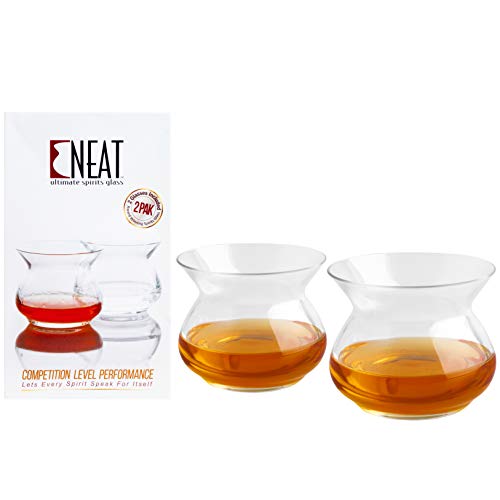
Poured into a tasting cup, this one shows a solid amber color with medium legs running down the glass. Nothing flashy here, but it’s exactly what you’d expect from a bourbon that’s spent five years total across two different oak barrels — rich enough to look the part without looking artificially dark.
Nose
Even with a nose that had already been through three other pours, vanilla and caramel came through clean and immediate. It’s not a complicated nose, and honestly, given the state my olfactory senses were in by that point, I was grateful for that. No need to hunt for it — the vanilla and caramel just show up and introduce themselves.
Palate
The palate leans sweet and grain-forward right out of the gate, with vanilla and oak trading off and a nutty note settling in underneath. This is where that toasted oak finishing barrel really does its job. Instead of piling on more tannin and char the way a lot of double oaked bourbons do, it seems to round out and support the sweetness rather than fight it. There’s a decent amount of body here, medium overall balance, and the sweetness never gets syrupy or one-note. It’s a bourbon that tastes like it was made by someone paying attention, even if I wasn’t always paying full attention back.
Finish
The finish runs short to medium, and it carries that sweetness right on through to the end, which I appreciated. What really got my attention, tired palate and all, was watching the nutty notes shift into something like sweet leaf tobacco right at the tail end. That’s not a flavor note you get handed very often in a craft bourbon, and it’s a nice, unexpected way for the pour to sign off.
Who Should Buy This
If you’re into wheated-adjacent, grain-forward sweetness and you like the idea of a double oaked bourbon that doesn’t turn into a plank of wood, this is worth seeking out. It’s a solid Friday night pour, something to sip after a long day rather than something to overanalyze. It would also slot in nicely as part of a flight built specifically around double oaked bourbons from different producers — it’s distinct enough from the more oak-heavy versions out there to make for a good comparison pour. If you’re chasing high heat or big spice, this isn’t your bottle. But if smooth, sweet, and easy-drinking at a respectable 100 proof is your speed, it delivers.
Where to Buy
Minglewood Double Oaked Bourbon is available directly at the distillery’s bottle shop and tasting room at their Wooster, Ohio location, where the distillery offers weekly tours on Fridays and Saturdays with private and group tours available upon request. Minglewood’s bourbon lineup also shows up through Ohio’s state liquor distribution system, so checking your local Ohio state liquor retailer or the OHLQ website for current inventory is a good bet if you’re not making the trip to Wooster. It is not available outside of Ohio as of this writing.
FAQ
What does “Bottled-in-Bond” mean?
Bottled-in-Bond is a legal designation requiring the bourbon be the product of one distilling season and one distiller, aged at least four years in a federally bonded warehouse, and bottled at exactly 100 proof. It’s a mark of quality and transparency that predates a lot of modern marketing language.
What is double oaked bourbon?
Double oaked bourbon is bourbon that’s finished in a second oak barrel after its initial aging period, usually to add another layer of wood-driven flavor. In Minglewood’s case, the second barrel is toasted rather than charred, which pulls out sweetness and softer wood notes instead of piling on more char and tannin.
Is this a good beginner bourbon?
Yes. At 100 proof there’s enough backbone to feel like a real bourbon, but the sweet, grain-forward profile and lack of aggressive heat make it approachable for someone newer to whiskey.
Where can I buy Minglewood Double Oaked Bourbon?
Your best bet is the Minglewood Distilling Co. tasting room and bottle shop in Wooster, Ohio, or checking Ohio’s state liquor retail system for current stock.
What’s the mashbill for this bourbon?
Minglewood’s standard bourbon mashbill runs 70% corn, 25% rye, and 5% wheat, aged four years in charred oak before this particular batch gets an extra year finishing in toasted oak.
Final Verdict
Even tasted fourth in line with a burned-out nose and half my attention on conversation, the Minglewood Double Oaked Bourbon held up. That’s a decent test for any whiskey, honestly — if it can still make an impression when you’re not giving it your full focus, it’s doing something right. The toasted oak finish is the real differentiator here, giving it sweetness and roundness instead of the oak-bomb effect a lot of double oaked bourbons fall into. I’m landing this one at 4.5 out of 5 stars. Not the most complex pour I’ve ever had, but a genuinely enjoyable one, and proof that a small Ohio distillery can put out a double oaked bourbon that holds its own against bigger names. Worth the drive to Wooster, tired nose or not.